
Cottage Desk shares practical, down-to-earth guidance on cosy home offices in cottages and rural remote working for readers across the UK.
- 0123456789
- Angle Bd Abdelmoumen & rue soumaya, Résidence
- [email protected]
Cottage Desk shares practical, down-to-earth guidance on cosy home offices in cottages and rural remote working for readers across the UK.
 By Sophie Bramley
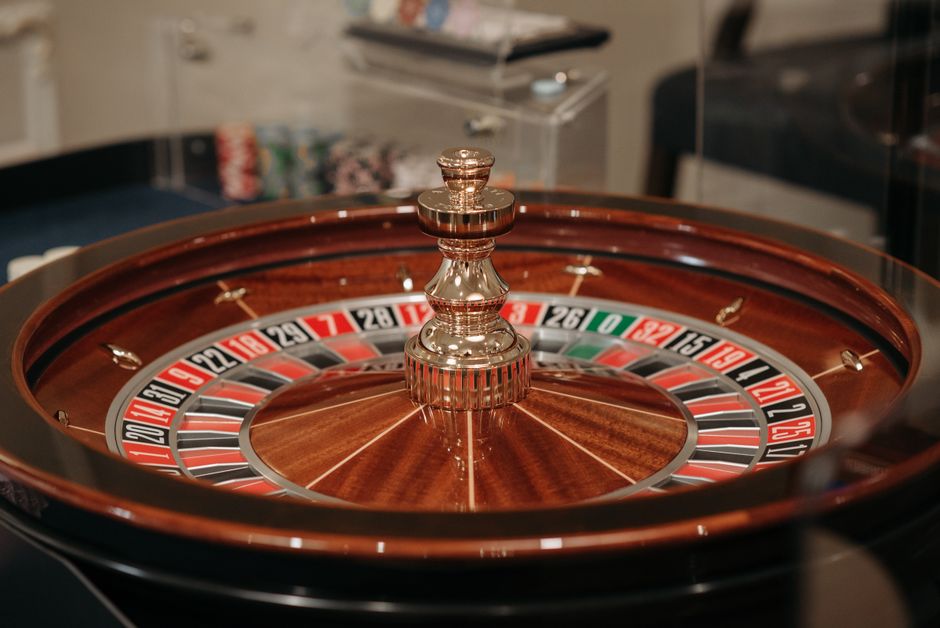
Every gambler remembers their first big win. Mine came on a Tuesday night in a half-empty casino in Reno, playing a $1 Wheel of Fortune slot that decided to spit out $400 for no apparent reason. I was hooked — not on the money, but on the mechanics. What made that machine pay? Why did the poker table next to me feel so different? Over the years, that curiosity turned into something closer to a study of the entire iGaming ecosystem: slots, sports betting, poker, live dealer tables, and the strange psychology that binds them all together.
If you're reading this, you've probably asked yourself the same question: is there a smarter way to play, or is it all just noise and luck? The honest answer is somewhere in between. Let's break it down the way a regular player would want it — no hype, no sponsored fluff, just the stuff that actually matters. It is also worth checking สล็อต before deciding.
Slots are the undisputed king of any casino floor, online or off. They account for roughly 70-80% of gaming revenue in most jurisdictions, and their design has become a science. But the single biggest mistake new players make is judging a slot by its maximum win potential. A game advertising a 50,000x jackpot might have a hit frequency of 1 in 200 — meaning you could spin for two hours and never see anything bigger than your original stake back.
The metric that actually matters is volatility, sometimes called variance. Here's a quick breakdown:
Practical advice: if you're playing with $50, high-volatility slots will likely eat it alive within 100 spins. If you're on a bigger bankroll and have the stomach for it, that's where the real money sits. Also, ignore "hot" and "cold" talk — RNGs don't have moods. Every spin is independent.
Here's the uncomfortable truth that casino operators don't shout about: poker is the only game in the building where a skilled player can have a long-term positive expectation. Slots, roulette, blackjack (with bad rules), and most table games are built on a house edge that grinds you down over time. Poker pits you against other players, and the house just skims the rake.
That doesn't mean it's easy. It means the variables are different. You're not fighting math designed to beat you; you're fighting weaker opponents. To do that well, you need three things:
If you're not willing to put in the study hours, stick to blackjack with basic strategy or accept that casino games are entertainment, not investment. There's no shame in that — just be honest with yourself about which category you fall into.
Sports betting has exploded in the last five years, and with it, a generation of bettors who treat parlays like lottery tickets. Sure, a 10-leg parlay can turn $10 into $2,000. It can also turn $10 into $0 with shocking regularity — the combined probability of hitting all ten legs is often under 1%.Sharp bettors approach sports differently. They focus on closing line value: the idea that if you consistently bet numbers better than where the line ends up, you'll profit over time regardless of individual results. That means shopping for the best odds across multiple sportsbooks, avoiding emotional bets on your favorite team, and tracking your bets like a business.A simple starter framework:
Also worth noting: sportsbooks limit winning accounts. If you're consistently sharp, expect your max bet to be cut. That's not paranoia, it's a business reality that tells you something about the industry's margins.
Live dealer games are the bridge between the convenience of online play and the atmosphere of a physical casino. Real dealers, real cards, real roulette wheels, streamed in HD from studios in Malta, Latvia, or the Philippines. The category has grown at double-digit rates for years, and it's easy to see why.
For players, it solves a trust problem. RNG-based online roulette can feel abstract; watching a real wheel spin on your screen makes the outcome tangible. For operators, live dealer tables have much lower overhead than a physical casino floor but command similar house edges. Evolution Gaming dominates this space, though competitors like Pragmatic Play Live and Playtech are catching up with innovative formats like lightning roulette and mega ball.
One warning: live dealer games usually have slower hand counts than their digital counterparts, which means less hourly action but also less exposure to a high-volume grind. If you enjoy the social element, they're worth the trade-off. If you're purely chasing EV, stick to RNG tables where you can play 60 hands an hour instead of 30.
Welcome bonuses are the bait of the iGaming world. A "100% up to $500" offer sounds generous until you read the terms: 40x wagering requirement, 7-day expiry, max bet $5, game weighting restrictions. Suddenly, a $100 bonus requires $4,000 in wagers before you can withdraw a dime — and slots contribute 100% while table games might only contribute 10%.
Before claiming any bonus, check three things:
Likewise, always check a game's RTP. Online slots typically range from 94% to 97%. That 3% difference sounds small, but over 1,000 spins at $1 each, it's the difference between losing $30 and $60. Some jurisdictions even let operators adjust RTP on the same game, so a slot may pay 96% on one site and 92% on another.
The iGaming world rewards players who treat it seriously and punishes those who don't. The people making consistent money — and they are rare — treat gambling like a discipline: they manage bankrolls, track results, understand variance, and walk away when the math turns against them. Everyone else is paying for entertainment, which is fine as long as they know it.
There's no magic system. There's no slot that's "due." That Reno win I had years ago? Pure variance. The players who last aren't the ones chasing the next jackpot; they're the ones who respect the game, the odds, and their own limits. If you take nothing else from this piece, take that.


We are not gonna make spamming
